

Memoir, Reinvented: The Pursuit of Truth with Terese Svoboda - Interviewed by Christa Lei
“If you're looking for the truth, you'll find it, one way or another. Or reframe the facts to fit” Terese Svoboda writes in Hitler and My Mother-in-Law, but it may as well be her artistic credo—I haven't stopped thinking about it since. In my own writing and in that of others, I find myself drawn to writers who move between forms to find the heart of the matter. Svoboda does this with precision and nerve in her work.
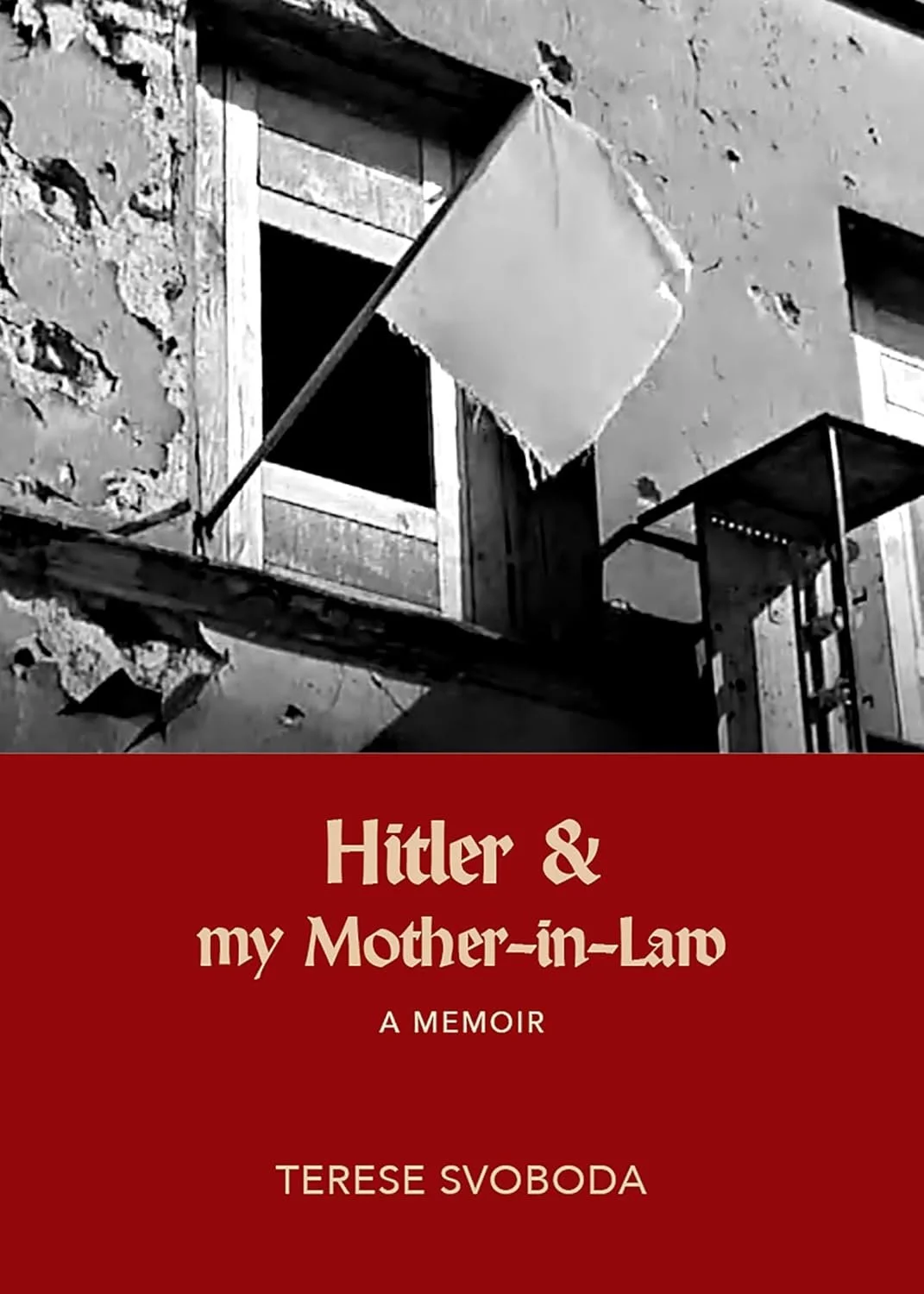
Terese Svoboda, Epiphany contributor and renowned writer, is known for her work across genres. She’s published twenty three books over the last half century, and in that time has reinvented herself as a poet, librettist, novelist, memoirist, short story writer, translator, biographer, and critic. Her regular literary metamorphoses have earned her a Guggenheim Fellowship, an Iowa Poetry Prize, and a Graywolf Nonfiction Prize, among other notable achievements. Hitler and My Mother-in-Law, her second memoir, features interviews and archival research that examine and unravel her mother-in-law's connection to World War II history. The premise stems from a search for a photograph of her mother-in-law, one of the few female war correspondents of her era, pointing to an urn allegedly filled with Hitler's ashes. Along the journey, she explores the concept of truth, and how humor helps us from being swallowed by it. I'll admit, I loved this book. I read it as a lyric essay with reportage, though Svoboda calls it “documentary poetry,” which tracks. Poets know what to do with limitation, how to twist a phrase until it reveals something real and strange. A good poet can do anything, even reinvent memoir.
Over email, we talked about memory as evidence, humor as survival, and why chasing the truth may be the funniest and most precious thing a writer can do.
Christa Lei (CL): How long did this book take you to compile and put together?
Terese Svoboda (TS): I began working on Hitler and My Mother-in-Law as soon as I had the title, which gave me—in charade-talk—the whole concept. Maybe it was 2019? I knew I had to interview my 100-year-old uncle-in-law quickly if I wanted his say—but then of course he lived to 103! Then, after doing much preliminary research online and just when I was beginning to look into the archives and think about traveling to Hawai'i for interviews, COVID hit and everything closed. On the bright side, with no engagements or travel, I had more time to write.
CL: One of your book's overarching themes, besides the "mother" and "mother-in-law" of it all, is this idea of who we are supposed to believe. What is true and what isn't? Especially if trustworthy people deem the initial source unreliable. (And in this day and age… an important question to ask ourselves.) How did you navigate honoring personal memory while questioning its authenticity?
TS: If you're talking about my memory, that is authentic, even if sometimes inaccurate. Other people's memories as reported to me are always colored by our relationship, who is being remembered, and their feelings toward their memories. Context for memories is all-important: emotional, perhaps gleaned from experience (He hated giving straightforward answers), physical (She was backing away when he said this), or historical (It was just three months after she left Hitler). Surrounding quotes with multiple contexts further supports whether this person is telling the truth or lying, but leaves the answer to the reader.
CL: You write women extraordinarily well—your work highlights a lot of strong, powerful (if unorthodox, especially in their time) women, but how did it feel to bring yourself into it? Including your experiences as a mother, the ways you were mothered, and the influence your mother-in-law had on your spouse. Did anything surprise you in the process?
TS: When I began to write my biography Anything That Burns You, about the little known proletariat modernist poet Lola Ridge, I wanted to include the story of my sudden infatuation with her and details from my exploration of her life that underscored her relevance to me and my poetry, but her light was too strong, and too many years stood between us to claim what I'd thought we shared. Besides, I was her age at the time I was writing about her final days, and my skin crawled thinking about myself and recognition. She deserved all the spotlight, having had so little written about her life and work. In contrast to Hitler and My Mother-in-Law, my first memoir, Black Glasses Like Clark Kent deals with my father and his family. The Graywolf editor kept urging me to write more about myself, something as a poet I was loath to do. Poets are often drawn to the genre because they can cloak their personal struggles with metaphor and allusion and any other veil of the trade they can unpack. My tendency is to precisely state any predicament without comment and trust the reader to feel its resonance. Having had a crushing experience with my mother, I welcomed the possibility of a mother-in-law as a replacement, which she was not. I was surprised to find motherhood was so much fun—my mother didn't enjoy having nine children. Perhaps few would. I was also surprised to find my husband welcomed my poking around his psyche with regard to his mother. She was an enigma he wanted solved.
CL: We share a Hawai'i connection: I was born and raised there, and my mother ran a neighborhood newspaper for Filipinos out there. You mentioned that Hawai'i was part of your original research plan before the lockdown halted everything. Since your mother-in-law lived there and presumably stored the titular photograph in her home, I imagine you were itching to go back! Once restrictions were lifted, how did returning (or deciding not to go) shift how you wrote about place and distance in the book?
TS: Soon after the COVID restrictions were lifted, my brother-in-law rescinded his offer to share any more of his mother's papers, a decision made in accordance with his brothers, but not my husband. But by then he had already sent me a tremendous amount of material electronically, and since I'd already lived in Hawai'i for a couple of years with and without his mother and knew the terrain pretty well, the trip wasn't crucial to the book.
CL: Earlier, you mentioned that as a poet you bristled against your publisher's desire to bring more interiority into your first memoir. This book, however, feels more self-aware and like a conversation between versions of yourself as daughter (in law), mother, and author. Did the act of writing this memoir change how you think about self-exposure and interiority on the page?
TS: I was still in the worshipful stage with regard to my father when I wrote Black Glasses Like Clark Kent, a book about race and justice in WWII. He goaded me into writing it, wanting to understand his brother better. I laid out what I discovered of my uncle's suicide and what he had taped as his back story, but I had no experience of my own to compare with the suffering of Black American soldiers held in Japan by the US and possibly executed. Hitler and My Mother-in-Law explores a much wider terrain—truth in families, journalism, and politics—which conceivably, could be even more avoidant of the personal, but this time I had people I knew who might not be telling me the truth, or at least all of it, and I wondered why.
CL: You speak about memory being “authentic even if inaccurate,” and about context as what gives a story its moral shape. In memoir, though, others' memories live beside ours. Your husband’s family members were cooperative participants in this story, which is not always the case for writers. Did that openness change how you thought about what to include—or what to withhold—in order to protect their voices and privacy?
TS: My brother-in-law had just retired from forty years of teaching journalism when he uploaded key documents for me from his mother's papers. He had only very recently given up the idea of writing a book about her, and appreciated the depth of my interest. He also generously gave me a copy of interview notes he had made twenty years earlier. I don't name the other brothers as they were guarded about this book even coming into existence, but fortunately they were seldom involved in its trajectory. The extended family, however, were very reluctant to share anything about their aunt and sister. Most of what I gleaned about my mother-in-law's first thirty-seven years had to be confirmed by her FBI file. As to what I withheld—you never know what people will be self-conscious about. I directly referenced my mother's alcoholism in my first book of poetry and all she objected to was my description of her in a heavy—and presumably unattractive—sweater.
CL: In a moment where public trust in institutions is fracturing, what role do you think the literary memoir plays in documenting—or resisting—political narratives?
TS: Memoir is the genre most likely to be banned, the pursuit of truth being its most prominent characteristic. This is because memoir acts as a catalyst for social change by encouraging personal empathy, critical thinking, and dialogue—all of which is feared by the current regime. As a promoter of truthtelling, memoir challenges societal norms, especially the skewed values around honesty that have become part of this circus of political discourse.
CL: Your work stands at the crossroads of poetry, memoir, and investigation. In this book, where emotion and evidence coexist so closely, did you ever feel those boundaries dissolving? Or did maintaining them through structure help you stay grounded with such personal material?
TS: Hitler and My Mother-in-Law, a kind of documentary poetry with footnotes? I favor a more spirited approach: structure by association, the way long lyrical poems are held together, but with many surprises, a.k.a. boundaries dissolving. Truth intersecting with guesswork is often moving. I've tried to group themes around her chronology, with the pursuit of the truth of Hitler's death throughout the book. Dead or not dead, that is the ultimate datum of a life. Morbid, but solid truth. Or seemingly so. In the case of Hitler, his body was not counted as dead for quite a long time. Fascism depends on lies such as “Hitler's alive” to support its cause, and Trump's are not coincidental.
CL: Across your books, women become archivists of their own survival. Into what kind of lineage do you hope this memoir enters?
TS: I would like to see Hitler and My Mother-in-Law shelved beside Rebecca Donner's All the Frequent Troubles of Our Days, Ruth Franklin's A Thousand Darknesses: Lies and Truth in Holocaust Fiction and the hilarious Jenny Lawson's Let's Pretend This Never Happened: A Mostly True Memoir. I mean, just look at the titles of books about women in WWII: The Invisible Woman, The Things We Cannot Say, The Girls Who Stepped Out of Line, A Woman of No Importance, A Life in Secrets, They Fought Alone, Taken by Force, and so many with the tagline The Untold Story. Cripes, that's just about as bad as that New York Times acknowledgement of my mother-in-law organizing a major Captain Cook centennial celebration: “Gov. George Ariyoshi has appointed an unpaid coordinator of the Cook bicentennial.” The accomplishments of mid-twentieth century women laid the groundwork for many of the freedoms and opportunities women experience today. They shouldn't have to struggle so hard to be remembered.
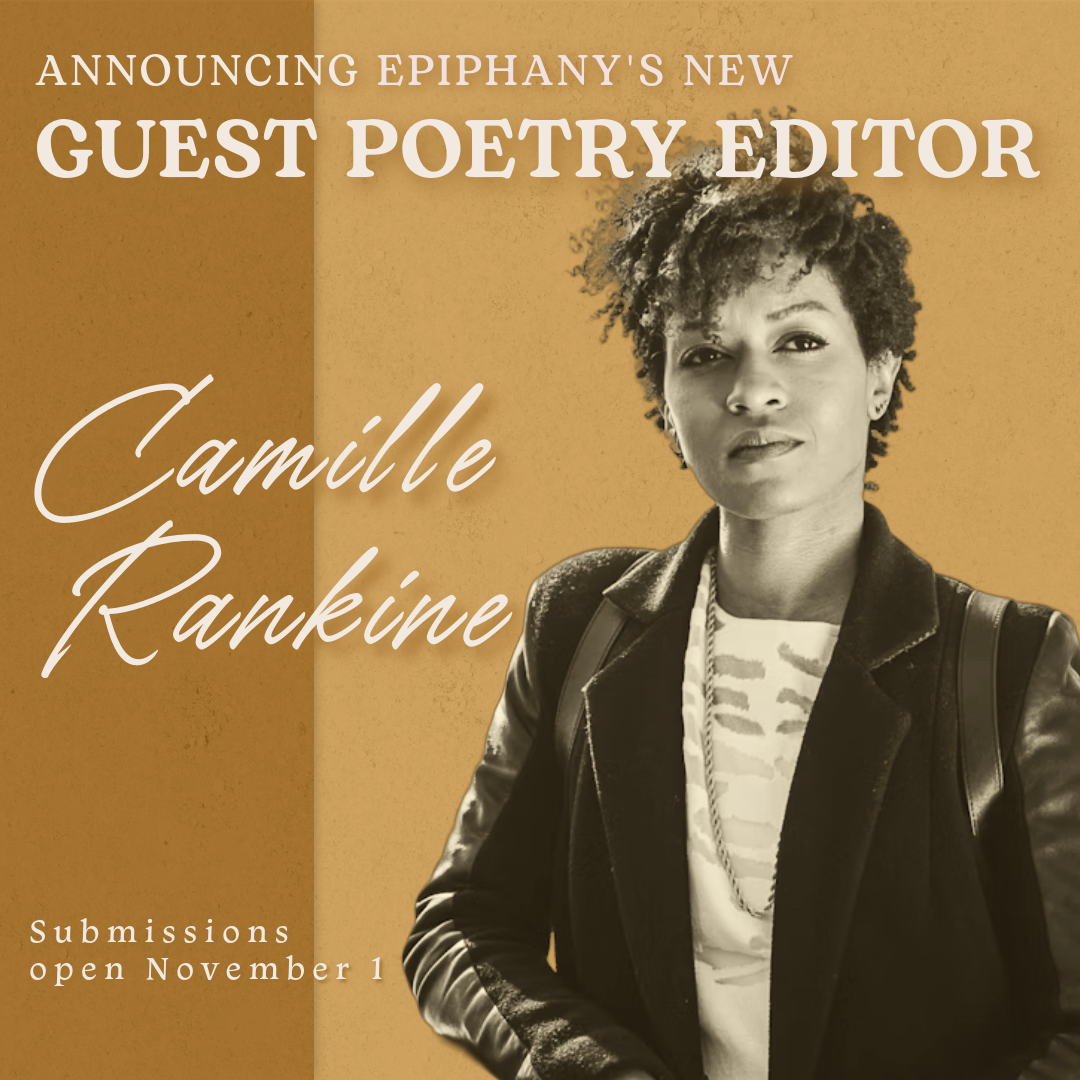
Christa Lei is a writer based in New York. They are an editor at Blood Tree Literature and JAKE, a regular contributor to Matador Network, and a reader at Epiphany. Their work appears or is forthcoming in The Seventh Wave's On Separation anthology, HerStry, Vast Chasm, and other publications. They are a proud Tin House, DISQUIET, and Southampton Writers' Conference alum. isthiswhatyouwant.org.