

The Hill of Lost Things by Skyler Melnick
A pack of toes runs down the hill. Have you seen our lady? they ask me.
No, I tell them.
Have you seen our feet?
I shake my head.
The toes stumble on, all ten of them, falling over one another. Rolling like pebbles.
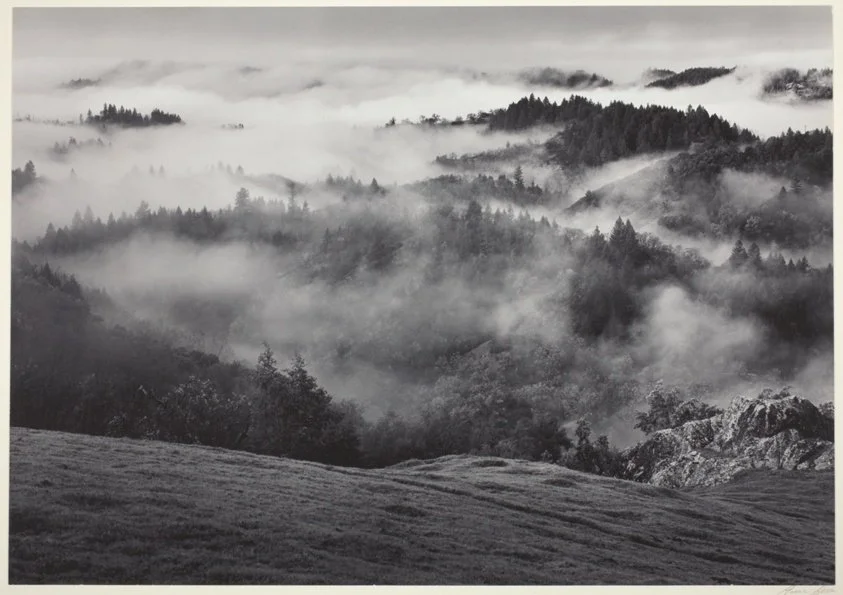
This hill is a hill of lost things. Everyone on it is lost in some way or other. Ramone sits beside me, legs flopped in front of her, heels digging into the grass, head on my shoulder. Her twin sister is missing.
How long have we been sitting here? she asks, watching the toes recede into the distance.
I look out at the hill, an endless stretch, its trees kissing the clouds. I pet Ramone’s head. It is a weight, tethering me to this earth. One day? I guess. Maybe two?
Two days? Ramone pushes my hand away. I’m going to be late! I’m definitely going to be late.
Late to what? I watch her hair fall into her face.
To the thing, she says. The thing, I told you.
The search party? Can I come with?
Don’t be ridiculous. Ramone gathers her tote, ties her shoelaces. And don’t––do not––stay here too long.
It can be hard to leave the hill. Once I stayed almost a week.
I watch Ramone go, her body moving with the wind.
I’m back, I tell my mom, sliding in through the side door, sitting at the kitchen table. What’s for dinner? I ask, sniffing the air for flavors.
Outside, the sun is about to set. Everything is golden, tranquil.
My dear, I am preparing the most spectacular lentil potato casserole.
Mom, how spectacular! I say.
No, dear, you’re spectacular.
I talk to myself like this for a few minutes, then I go into the den and pretend to be my father.
Have you been keeping up with your studies?
No, I respond. Not at all.
Then I go to the bedroom I share with my sisters. I sit on my older sister’s bed and chastise myself. Then I act as my younger sister, and whine for a bit.
I haven't seen my family in quite some time, and I don’t know, can’t figure out, where they went. They must have just picked up on a whim—they have those—and forgotten to take me, to tell me. This is possible. I know I am forgettable.
I call Ramone. She doesn’t pick up. Ramone! I scream into the receiver, then slam it down.
I re-pack my rucksack and return to the hill.
Good-bye Mom, I say.
Don’t slam the door so hard! I say for her.
Sorry Mom, I say for me.
It’s dark by the time I make it back to the hill. There are still plenty of people, creatures, broken things, sprawled out around the green. I lay my blanket down on a grassy patch beneath a tree and rest my eyes.
Good-night Hill, I say, pressing my mouth against it.
Good-night, it says. Sleep tight. You are loved, cherished, and special, spectacular, unforgettable.
You’re sweet, I tell the hill, pressing my body into it.
Ramone is here when I wake, standing above me, sun backlighting her like an angel. She kicks me several times, until I grumble. Get up, she says. She has always been an early riser.
I grumble again.
You’re weak-willed, she says, but she’s smiling. She sinks down, puts her mouth to my ear. We found her, she whispers.
Found who?
My sister, she says.
Oh, I jolt up. The sun shrinks my pupils and I wince. How?
I’ll tell you later, she says, long story. God, Rhiannon is an idiot. But then again, so am I. That’s why it’s good to have a double, Ramone says. Your qualities aren’t so strong when divvied up.
I say nothing.
Obviously, she says, I can’t come to the hill anymore. Don’t make that face! I’m not welcome anymore. The grass is already prickling me, stinging my ankles. I have to go. She stretches her arms out to the sky. I have to go live, she says.
And what am I doing?
You can stay in my basement, she says, if you want. I mean, it isn’t well ventilated. I wouldn’t if I were you, but of course, you can, you’re welcome to.
Am I?
Call me, Ramone says. Call me anytime!
I scrunch into myself, into the hill, until Ramone is gone.
I scan the hill for replacement companions. I look at the old widowers, in their suits and sunglasses. The toes are still wandering, aimless, poor, stupid things. The nestless birds, chirping until their voices are hoarse. The sad orphan children—too sad, I can hardly look.
Why do you stare at us? shouts the smallest orphan. Her baby teeth dangle from her gums.
Sorry, I say.
You’re ugly, the smallest orphan screams.
Excuse her, says a bespectacled orphan boy, the frames crooked on his nose. She didn’t learn manners, he says, on account of her being motherless and raised by a hill.
The orphans are seated in a circle. I scoot closer and the circle opens to let me in. You aren’t that ugly, the orphan boy says. It’s just that your mouth is too small and your forehead’s too large. But most of us are ugly, he says. That’s what happens when you grow up like we do, like peas with no pods.
No, no, I shake my head quickly. I’m not like you.
Not like what?
Like, an orphan.
Then what are you? he asks. You’re not a toe.
She’d be an awfully large toe, says a large orphan.
Last night, another orphan whispers, they crawled all over me in my sleep, the toes did.
The orphans wait for me to scoot all the way into their circle, their sad little circle. I’m not like you, I repeat, scooting in. They need to know I’m not. I have a house, I say.
A hill is a house, they chant. A HILL IS A HOUSE, A HOUSE IS A HILL.
When the sun sinks and it’s pitch black night, the orphan boy leans into me. He smells like my sisters, like mushrooms and marshmallows. The wind blows his scent straight into my nostrils.
A storm is coming, he says.
Then I’ll go home, I say, not moving. My house has all the practicalities one needs to survive, I tell him.
Must be nice, he says, breathing on my face. His breath is cold.
Yes, I agree.
The orphan boy presses his mouth to my cheek, his lips like icicles. I try to extract them from my face.
A hill isn’t a home, I say.
The orphans are awake, listening. They chant: A HILL IS A HOME, A HOME IS A HILL. THE HILL IS OUR HOME AND TO IT WE BELONG.
In the morning, we are scattered. The storm has thrown our bodies this way and that. I’m by the tree, and I squint to see the others. The smallest orphan is in a ditch, and I want to laugh, to see how many of her baby teeth are still intact.
The sun shines down on me in patches and I look up at the tree branches––I see orphans huddled together, clinging to the bark.
Get down, I say. You’re going to hurt yourselves. I think of my little sister, her pigtails bouncing as she runs, as she falls. Bloody knees! I tell the orphans.
A TREE IS A HOUSE, A HOUSE IS A TREE, they chant.
Idiots, I mumble.
Have you seen our feet? The toes wander toward us.
NO, an orphan screams.
The toes sob, tears leaking from their cuticles and forming a puddle. The puddle takes them, all ten, sliding them back down the hill. I want to return home, to check on the emptiness, to talk to my family, but my body stays put.
The orphans crowd around me, sitting criss-cross. They are silent, awaiting orders. I stand up, go to the center of the circle. I am tallest, bravest––the orphan queen. Let’s explore, I decide.
The orphans and I gather walking sticks and make our way up the hill. The hill is large, it has a vast circumference. A conic shape, up and up until you hit its peak. We have hovered in the middle, because of its proximity to the bottom, and the intrinsic safety of middleness, but now we rise. We rise and we walk.
We’ve been walking forever, they complain.
Hardly, I say.
When we reach the top, I half expect to see my family, to see them as lost as I am, overjoyed at the sight of me, having prayed so desperately for our reunion.
Walking forever! an orphan echoes. I’m tired.
No, says another. I’m more tired.
We pass stray dogs and motherless kittens.
We’re not getting anywhere, says an orphan. I think we’re lost.
No more than before, I tell them.
The hill gets steeper. We have to scale it on our hands and knees.
Come along, I tell the smallest orphan, who lingers behind us.
I am, she says, face sour.
Isn’t this an adventure? I ask them. I figure orphans like adventure.
My best friend is called Ramone, I tell them, as we ascend. The orphan boy stays close to my side. Ramone was lost once, I go on. But now she isn’t.
I had parents once, says an orphan.
NO YOU DIDN’T, the rest of them scream.
None of us had parents, the orphan boy says. I think, he says softly, the hill created us.
That’s stupid, I say, digging my fingers into the hillside. But I’m unsure.
STOP, says an orphan ahead of us.
We stop. We look. We have reached it—the hill’s peak, which is not so much a peak, I realize, as a gaping hole. Volcano, I tell them.
No more grass, there is only dirt, a rim of it. We stand in a half-circle, feet filthy, peering into the hole’s darkness. The children don’t understand, so I explain to them about lava shooting out and oozing, melting everything in its path. Deadly, I say. They laugh, unconvinced.
The smallest orphan finally catches up. She stares at the hole. Who’s going first? she asks.
Going? I say. Going where?
In, she says. She moves her tongue around her mouth and spits out a baby tooth. We watch as the white dollop falls into the hole, into the hill.
No one is going in! I say.
We can go together. The orphan boy interlaces a hand with mine.
So cold is his hand, so cold it burns, scalds me, that I pull away abruptly, causing his wiry body, his spectacles, to go flying—
We hear his screams, watch him falling, falling and falling, then nothing.
Now look what you’ve done, an orphan says. He was our only boy!
I look at the pack of orphan girls, then at the hole. It would be simplest if they jumped. If I jumped too. Perhaps my family did. If I listen hard, I think I hear sounds emanating from the hole, breathy, like my sisters snoring.
Okay, fine. I say. Fine! We’ll jump.
The orphans cheer. Some of them sob.
But we have to jump quickly, before I have time to think, to wonder what will become of us. Will we splatter on impact? Is there a world inside the hole? A truer world, with houses that are full, where orphans have parents, where toes have feet, even legs?
The orphans line up and hold hands. They avoid mine. I wonder if the orphan boy is still falling.
I’ll count, says the smallest. Let me count!
Count to ten, they say.
I can only do four.
Count to four, they say.
One…
I look into the hole. So dark, such pure darkness.
Two…
The orphans will like it, surely they’ll be happy down there.
Three…
But me, I’ve never liked the dark. I’ve known the light, so how could I be happy in the dark?
FOUR!
In the orphans go, and I watch them, limbs flailing, faces smiling, whimpering, scowling at me.
I trek back down the hill, alone. Not thinking about the orphans. Their shocked faces. I made no promises, I was never one of them. Pink tints the sky, the sun is setting. I’ll go home, check on the house, call Ramone. Let the line ring again and again, until it goes dead.
We have no feet! The toes hobble past me, hangnails peeling, bloodied.
You never had feet, I tell them.
I look back, wondering how much loss the hill has swallowed. My stomach gurgles. I’ll go home and Mom will be cooking, Dad in the den, my sisters napping. The sun sinks beneath the horizon and I run. The dark won’t catch me.
Skyler Melnick has an MFA in fiction from Columbia University. She writes about sisters playing catch with their grandfather's skull, headless towns, and mildewing mothers. Her work appears in Wigleaf, Fairy Tale Review, Hunger Mountain, and elsewhere, forthcoming in Best Microfiction 2025; she has been awarded fellowships from Yaddo, Bread Loaf Writers' Conference, and Vermont Studio Center, as well as first place in Fractured Lit’s 2024 Ghosts, Fables & Fairy Tales contest.